
Foundation Setup
Setting Up a Swiss Foundation as a Foreigner: Requirements and Process
By Hansruedi Mueller, Swiss foundation lawyer, published 4 June 2026 · last updated 4 June 2026
Yes, a foreigner can set up a Swiss foundation. Swiss law imposes no nationality and no residency requirement on the founder: under the Swiss Civil Code, a foundation may be established by any natural or legal person, whether resident in Switzerland or not. There is no restriction on the founder’s origin, 100% foreign participation in a Swiss foundation is entirely permissible. The conditions that matter attach to the foundation itself, its registered seat, its representation, and its capital, rather than to the person who founds it.
This guide sets out what a non-resident founder needs to know: who may establish a Swiss foundation, the requirements that apply to foreign founders, how local representation works, the step-by-step process, and the due-diligence checks that take longer when assets cross borders. It supports our wider Swiss foundation complete guide.
Key takeaways
- Foreigners and non-residents can set up a Swiss foundation. There is no Swiss nationality or residency requirement for the founder.
- The foundation must have a registered seat in Switzerland and be representable by at least one person resident in Switzerland with signatory authority.
- That resident representative need not be a Swiss citizen and need not personally be a board member.
- Swiss law sets no statutory minimum capital, but the supervisory authority generally expects around CHF 50,000 for a charitable foundation.
- A foundation acquires legal personality only on entry in the commercial register.
- Foreign founders should expect longer due-diligence and source-of-funds checks when opening the Swiss bank account.
Can a foreigner set up a Swiss foundation?
Yes. Under Swiss Civil Code, Articles 80 and 81, a foundation is created when a founder dedicates assets to a defined purpose by public deed or by will. The law does not limit who that founder may be. A founder can be:
- an individual, resident in Switzerland or abroad;
- a foreign national, with no Swiss passport or permit; or
- a legal person, including a foreign company or another foundation.
In other words, the founder’s nationality and place of residence are irrelevant to eligibility. What Swiss law requires is that the foundation, once created, meets Swiss conditions: a registered seat in the country, proper representation, and assets sufficient for its purpose. Those requirements are the subject of the rest of this guide.
This open approach is consistent across foundation types. A non-resident may found a charitable (public-utility) foundation or, subject to its strict statutory limits, a family foundation. For the wider legal framework behind these provisions, see our guide to Swiss foundation law and Civil Code Articles 80–89.
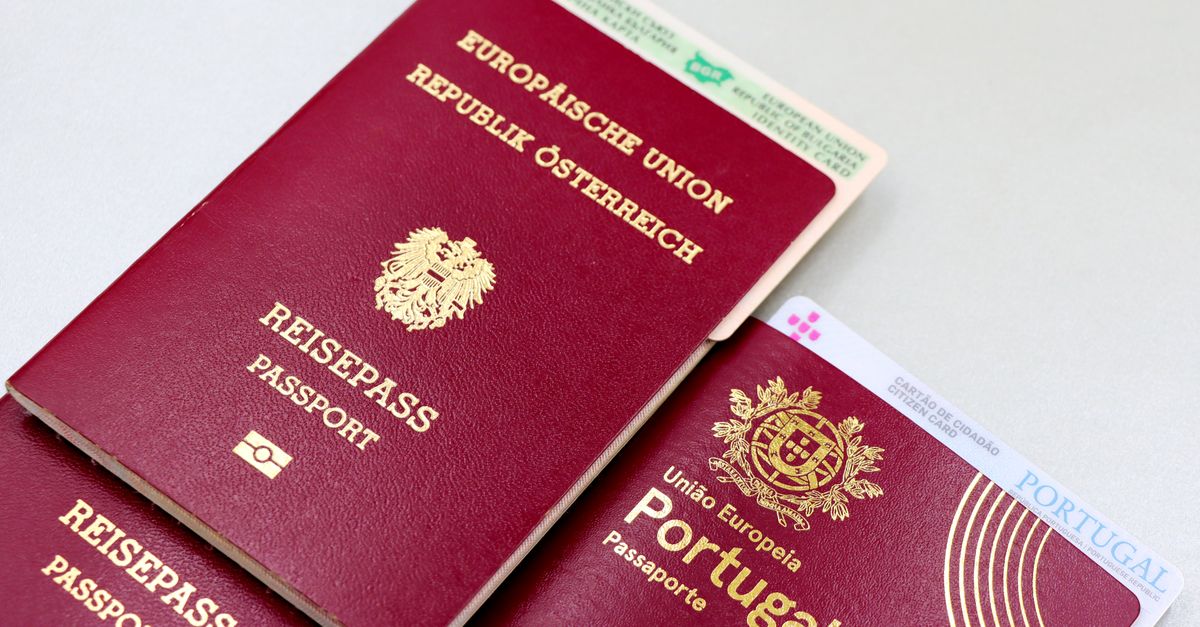
Requirements for non-resident founders
Because the founder’s status is open, the requirements all concern the foundation. A non-resident founder should plan for the following:
- A registered office (seat) in Switzerland. The foundation must be domiciled in Switzerland. A dedicated physical office is not always necessary; a domiciliation address with a Swiss service provider can satisfy the requirement.
- Swiss-resident representation. The foundation must be representable by at least one person resident in Switzerland with signatory authority (see the next section).
- Sufficient capital. Swiss law sets no statutory minimum, but supervisory authorities expect assets sufficient to pursue the purpose on a sustainable basis, a practical floor of around CHF 50,000 for a charitable foundation, and often more. For figures, see our guide to Swiss foundation cost and capital requirements.
- A lawful, clearly defined purpose set out in the foundation charter.
- A notarial public deed (Article 81) and entry in the commercial register, which is what gives the foundation legal personality. Since 1 January 2016 all foundations, including family foundations, must be registered.
| Requirement | What applies to a foreign founder |
|---|---|
| Founder nationality / residency | None required |
| Registered seat | Must be in Switzerland (domiciliation acceptable) |
| Local representation | ≥ 1 Switzerland-resident person with signatory authority |
| Minimum capital | None in law; ≈ CHF 50,000 expected for charitable |
| Formation | Notarial public deed (Art. 81) or by will |
| Legal personality | On entry in the commercial register |
Nationality and residence of the founder are not barriers.
Ensure the board can be represented in Switzerland.
Provide KYC and source-of-funds evidence.
Execute the deed and enter the commercial register.
Board and local representation
This is the requirement that most often surprises foreign founders, so it is worth being precise.
A Swiss legal entity that is entered in the commercial register must be capable of being represented by at least one person domiciled in Switzerland who holds signatory authority. For companies, this is set out explicitly, Article 718, paragraph 4 of the Swiss Code of Obligations for the public limited company, and Article 814, paragraph 3 for the limited liability company. The commercial register applies the same principle to foundations, which are register-entered legal entities.
Three points follow that often ease a foreign founder’s concerns:
- The resident representative must be resident in Switzerland, but need not be a Swiss citizen. This Swiss representative (often a fiduciary or law firm) holds signatory authority on behalf of the foundation.
- That person need not be a member of the foundation board (Stiftungsrat). The role can be filled by a registered representative or an external service provider with signatory authority.
- In practice, the foundation board commonly includes at least one Switzerland-resident member as well, which helps with day-to-day administration and correspondence with the supervisory authority.
A foreign founder can therefore keep effective influence over the foundation’s purpose and governance through the charter and board composition, while satisfying the local-representation requirement through a Swiss-resident signatory. How the board is structured and what duties it carries are part of the wider governance framework covered in our Swiss foundation law guide.
Step-by-step process for a foreign founder
The path mirrors a domestic setup, with a few extra steps where documents and assets come from abroad.
- Define the purpose and structure. Decide what the foundation is for and how it will be governed. The purpose drives everything that follows and must be lawful and clear.
- Draft the foundation charter and supporting documents. Certified translations of identity and corporate documents may be required where these are not in an official Swiss language.
- Arrange the Swiss seat and resident representation. Put the registered office and the Switzerland-resident signatory in place before registration.
- Open a Swiss bank account and deposit the capital. The capital must sit in a Swiss account before registration. For foreign founders this is usually the step that takes the most time, because of due-diligence and source-of-funds checks (see below).
- Notarise the foundation. Formation is by public deed before a Swiss notary (Article 81), or by will. The deed can often be executed by proxy under a power of attorney, so the founder need not always travel.
- Register in the commercial register. On entry, the foundation acquires legal personality and can act in its own name.
- Register with the supervisory authority. The Federal Supervisory Authority for Foundations (ESA) supervises foundations with national or international scope; a cantonal authority supervises those active mainly in one canton. Charitable foundations then apply to the tax authority for exemption.
Because the bank checks add time, foreign founders should plan a slightly longer timeline than residents. For realistic estimates, see how long it takes to set up a Swiss foundation.
Due diligence and source of funds
Switzerland is an open jurisdiction for foreign founders, foreign investment in Switzerland faces no statutory barriers at the foundation level, but it is also a rigorous one. The checks fall mainly on the bank, not the founder, yet they shape the timeline.
Swiss banks must identify the contracting party and the beneficial owner of the assets, and verify the source of funds (proof of capital), under the Anti-Money Laundering Act (AMLA) and the banking sector’s Agreement on the Swiss Banks’ Code of Conduct with regard to the exercise of due diligence (the CDB). This KYC (know-your-customer) process is standard across Swiss banks; for cross-border founders it is simply more document-intensive. Where a founder is based abroad, or where the assets pass through several countries or holding structures, this review typically takes longer, often two to four weeks or more, against one to two weeks for a straightforward resident case. Switzerland is also introducing a central register of beneficial owners, which increases transparency obligations for legal entities.
In practice, this means a foreign founder should:
- engage the chosen bank early, in parallel with drafting, rather than after;
- prepare clear source-of-funds documentation, for example, sale proceeds, inheritance records, or audited company accounts; and
- expect requests for certified translations of identity and corporate papers.
None of this is an obstacle to legitimate asset protection and philanthropy; it is the standard cost of using a well-regulated jurisdiction. Honest preparation is the single biggest factor in keeping the process on schedule.

Cross-border tax, a brief note
Founding a Swiss foundation is open to non-residents, but the tax consequences depend on the founder’s home country. Rules on residence, attribution of foundation income, controlled-entity regimes, reporting, and treaty effects vary widely, and outcomes are specific to each case, we do not promise a particular tax result. We cover the main cross-border scenarios in dedicated guides: for expats holding assets abroad, for UK residents, and for US citizens and FATCA. A further point for families: a Swiss family foundation is tightly restricted under Article 335 to the education, endowment or support of family members, so some foreign founders use other structures or jurisdictions for broader objectives.
If you are a non-resident weighing a Swiss foundation, our Zug-based team can confirm the requirements for your situation, arrange local representation, and manage the bank and registration process end to end. Book a consultation.
Frequently asked questions
Can a foreigner set up a Swiss foundation? Yes. Swiss law places no nationality or residency requirement on the founder. Under Swiss Civil Code, Articles 80 and 81, any natural or legal person, resident or non-resident, Swiss or foreign, may establish a Swiss foundation, provided the foundation has a registered seat in Switzerland.
Do you need to live in Switzerland to start a Swiss foundation? No. The founder does not need to live in Switzerland. The foundation itself must have a Swiss registered seat and be representable by at least one person resident in Switzerland with signatory authority, but the founder can remain abroad.
Does a Swiss foundation need a Swiss-resident board member? The foundation must be representable by at least one person domiciled in Switzerland who holds signatory authority. That person need not be a Swiss citizen and need not be a board member, the role can be filled by a registered representative or service provider. In practice, many foundations also include a Switzerland-resident board member.
How much capital does a foreign founder need? Swiss law sets no statutory minimum capital. In practice the supervisory authority generally expects around CHF 50,000 for a charitable foundation, enough to pursue the purpose sustainably, and operating foundations are often endowed with considerably more.
What checks apply to foreign founders? The Swiss bank holding the capital must identify the founder and the beneficial owner and verify the source of funds under anti-money-laundering rules. For foreign or cross-border assets this due diligence usually takes longer, and certified translations of identity and corporate documents may be required.
Can a foreign company be the founder of a Swiss foundation? Yes. A founder may be a legal person as well as an individual, including a foreign company or another foundation, subject to the same requirements on the foundation’s seat, representation, and capital.
Can a trust own or control a Swiss foundation? A trust can act as the founder or endow a Swiss foundation, since a legal person (including a foreign trust where it has legal personality) may establish a foundation. The interaction between the two structures depends on the governing law of the trust and the purpose of the arrangement; advice from lawyers in both jurisdictions is advisable, as Swiss law and the founder’s home-country law may treat the structure differently.
Does a foreign founder need to travel to Switzerland to set up a foundation? Not necessarily. The notarial public deed that forms the foundation can often be executed by a representative acting under a notarised power of attorney. That power of attorney may itself need to be certified or apostilled if issued abroad. Confirm the specific notary’s requirements in advance, as practice varies.
How long does the process take for a non-resident founder? A non-resident founder should expect the overall process to take roughly three to six months, compared to four to eight weeks in a straightforward domestic case. The main additional time comes from bank due-diligence and source-of-funds checks (two to four weeks or more) and any certified translations or legalisation of foreign documents (two to six weeks). See our Swiss foundation timeline guide for a phase-by-phase breakdown.
What source-of-funds documents does a foreign founder need? The Swiss bank will ask for evidence that the assets being endowed are legitimately acquired. Acceptable documentation typically includes audited company accounts, sale-of-business records, inheritance or estate documents, or investment-account statements. Where documents are not in a Swiss official language (German, French, or Italian), certified translations are usually required.
Does a foreigner need a Swiss work permit or residence permit to found a foundation? No. The founder is not an employee and does not perform work in Switzerland; founding a Swiss foundation does not require a work or residence permit. The requirement for a Swiss-resident representative concerns the foundation’s ongoing governance, not the founder’s personal immigration status.
Can a non-resident sit on the foundation board? Yes. Non-residents can be and frequently are members of a Swiss foundation board. The only representation requirement is that at least one person domiciled in Switzerland holds signatory authority, that person can be a professional fiduciary, a law firm, or a co-opted board member. The remaining board members may be based anywhere in the world.
What happens if the Swiss-resident signatory resigns or becomes unavailable? The foundation must at all times be representable by a Switzerland-resident signatory. If the appointed person leaves, the foundation’s board is obliged to appoint a replacement and update the commercial register promptly. A gap in local representation is a compliance issue and the supervisory authority can require it to be remedied. Most professional service providers offer continuity arrangements for this reason.
This article is general information and not a substitute for formal legal advice. Foundation law, due diligence, and cross-border tax turn on the specific facts; please seek advice before acting.
Sources
- Swiss Civil Code (ZGB), Articles 80, 81, 87 and 335, Fedlex, SR 210: https://www.fedlex.admin.ch/eli/cc/24/233_245_233/en (accessed 4 June 2026)
- Swiss Code of Obligations, Article 718 para. 4 (resident representation of the public limited company), Fedlex, SR 220: https://www.fedlex.admin.ch/eli/cc/27/317_321_377/en (accessed 4 June 2026)
- Swiss Code of Obligations, Article 814 para. 3 (resident representation of the limited liability company), Fedlex, SR 220: https://www.fedlex.admin.ch/eli/cc/27/317_321_377/en (accessed 4 June 2026)
- Federal Supervisory Authority for Foundations (ESA), Federal Department of Home Affairs: https://www.edi.admin.ch/en/federal-offices-and-administrative-units-of-the-fdha (accessed 4 June 2026)
- Commercial register and legal personality for foundations, KMU / SECO portal: https://www.kmu.admin.ch/kmu/en/home/concrete-know-how/setting-up-sme/starting-business/commercial-register%20.html (accessed 4 June 2026)
- Anti-Money Laundering Act (AMLA) and customer due diligence / source of funds, FINMA: https://www.finma.ch/en/enforcement/combating-money-laundering/ (accessed 4 June 2026)
Note on sourcing: the verbatim English text of the cited ZGB and CO articles on Fedlex is delivered through a JavaScript-gated interface and could not be machine-extracted; the wording above is a faithful paraphrase corroborated against official sources (Fedlex SR 210 and SR 220, the EDI/ESA pages, and the federal KMU/SECO portal). The Swiss-resident representation requirement is codified for companies (Art. 718 para. 4 and Art. 814 para. 3 CO) and applied to foundations under commercial-register practice; it is described here as established practice rather than a single dedicated foundation-law article. Bank due-diligence timing ranges are practitioner estimates, not regulatory figures.