
Comparisons
Swiss Foundation for US Citizens: FATCA & Tax Guide
A US citizen or green-card holder can be the founder, a board member or a beneficiary of a Swiss foundation, Swiss law does not bar it. What a Swiss foundation does not do is remove US tax. The United States taxes its citizens and permanent residents on their worldwide income, wherever in the world they live, and the US Internal Revenue Service (IRS) usually treats a Swiss foundation as a foreign trust. The practical result for a US person is not a lighter tax bill but a heavier compliance burden, with severe penalties for getting the reporting wrong.
This guide explains, for US persons and their advisers, why a Swiss foundation does not avoid US tax, how the IRS classifies it, the reporting you should expect, Forms 3520, 3520-A, 8938 and the FBAR, how the Foreign Account Tax Compliance Act (FATCA) reaches your Swiss accounts, where the worst tax traps lie, and when a Swiss foundation can still make sense. It is general information, not US tax advice.
Key takeaways
- US persons are taxed on worldwide income; a Swiss foundation does not change that.
- The IRS most often treats a Swiss foundation as a foreign trust (sometimes a foreign corporation).
- Expect Forms 3520, 3520-A and 8938 (FATCA), plus the FBAR, and possibly Form 8621 for underlying funds.
- Switzerland’s banks report US-owned accounts to the IRS under FATCA.
- Penalties for non-filing are severe (Form 3520, for example: the greater of $10,000 or 35% of the amount involved).
- This is general information, not US tax advice, always engage a qualified US cross-border tax adviser.
Important, read first: A Swiss foundation does not remove or reduce US tax for a US person. It typically adds substantial US reporting, with severe penalties for getting it wrong. Always take qualified US tax advice before you act. We advise on Swiss foundation law and coordinate with your US adviser, we are not US tax advisers.
US citizens are taxed on worldwide income
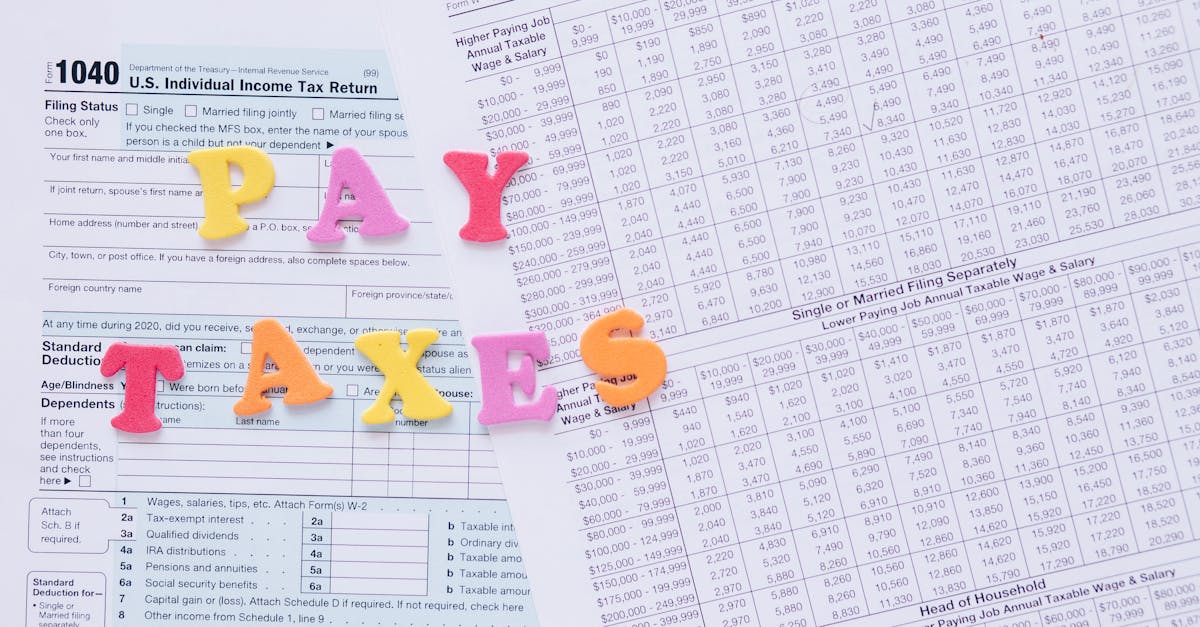
The starting point is the most important one. The United States operates citizenship-based taxation: a US citizen, and a lawful permanent resident, the green-card holder, is taxed on worldwide income regardless of where they live. Earning everything abroad, holding it abroad, and never setting foot in the US for a year changes nothing. The obligation to file and report ends only on renouncing citizenship, or on formally abandoning the green card by filing Form I-407, under the US expatriation rules.
There is relief on the tax itself. The foreign earned income exclusion and the foreign tax credit can reduce or eliminate the actual US tax due on foreign income that has already been taxed abroad. The US-Switzerland tax treaty (Convention of 2 October 1996) provides additional relief, notably credits and reduced withholding rates on Swiss-source dividends, interest and royalties, but it does not override citizenship-based taxation and it does not exempt a US person from the information-reporting obligations described below. But that relief operates on the tax, not on the filing and reporting. A US person must still file a US return and still file the international information returns described below, even in a year when no extra US tax is owed.
This is why a Swiss foundation cannot be a substitute for US tax planning. It is a Swiss-law structure that sits on top of the US person’s existing worldwide-tax position. Choosing between a foundation and other structures is a separate question, our pillar guide on a foundation versus a trust sets out that comparison, but no Swiss structure switches off US taxation of a US person.
How the IRS classifies a Swiss foundation
The next problem is that the IRS does not take the Swiss label at face value. US tax law classifies a foreign entity under its own rules, the entity-classification regulations at Treasury Regulations §§301.7701-2 and 301.7701-4, on a facts-and-circumstances basis. A Swiss foundation (Stiftung) is therefore assessed on what it actually does, not on the fact that Swiss law calls it a foundation.
In most private-wealth cases, the IRS treats a Swiss foundation as a foreign trust. It can instead be treated as a foreign corporation where the entity is essentially carrying on a business rather than conserving assets for beneficiaries. The outcome is fact-specific, so it should never be assumed, but for a typical family or philanthropic foundation, foreign-trust treatment is the common result.
The trust test is mechanical. For US purposes a trust is foreign unless it passes both of two tests: a US court must exercise primary supervision over its administration, and one or more US persons must control all of its substantial decisions. A Swiss foundation, supervised in Switzerland and governed by a Swiss board (Stiftungsrat), fails both, so it is a foreign trust. For what a foundation is under Swiss law, see our explainer on Swiss foundation law under Civil Code Articles 80–89.
Classification then drives the tax treatment. Under the grantor-trust rules (Internal Revenue Code §679), a US person who transfers assets to a foreign trust with a US beneficiary is treated as the owner and is taxed on its income currently, as if the structure did not exist. Where the foundation is instead a foreign non-grantor trust that accumulates income, a later distribution to a US beneficiary can be caught by the US “throwback” rules, which tax accumulated income with an added interest charge. The detail depends on the structure; the point is that none of these routes is benign.
The US reporting you must file
Classification produces a reporting matrix, and the reporting is an obligation in its own right, it applies even in years when little or no extra US tax is due. The forms a US person involved with a Swiss foundation should expect are these.
| Form | What it reports | Triggered by | Filed where / when |
|---|---|---|---|
| Form 3520 | Transactions with, and ownership of, a foreign trust (and large foreign gifts) | Founding or funding the foundation; receiving distributions | With the income tax return; broadly 15 April, extendable to 15 October |
| Form 3520-A | Annual information return of the foreign trust that has a US owner | Being treated as US owner of the foundation | Broadly 15 March; the US owner must ensure it is filed (or file a substitute) |
| Form 8938 (FATCA) | Specified foreign financial assets above set thresholds | Holding foreign financial assets over the threshold | With the income tax return |
| FBAR (FinCEN Form 114) | Foreign bank and financial accounts over $10,000 in aggregate | A financial interest in, or signature authority over, foreign accounts | Filed with FinCEN, separately from the return; 15 April, automatic extension to 15 October |
| Form 8621 | Interests in a passive foreign investment company (PFIC) | The foundation holding non-US funds | With the income tax return |
Two thresholds are worth stating plainly. Form 8938, the individual FATCA return, must be filed by a US person living in the United States once specified foreign financial assets exceed $50,000 at year-end if single ($100,000 if married filing jointly); for US persons living abroad the figures rise to $200,000 and $400,000 respectively, with higher “any time during the year” figures as well. The FBAR is triggered at a much lower level, an aggregate of more than $10,000 across foreign accounts at any point in the year.
A common and costly misunderstanding is to treat Form 8938 and the FBAR as the same thing. They are not. They are different forms, filed with different agencies under different rules, and both can apply to the same person in the same year. Filing one does not satisfy the other.
FATCA and the Switzerland–US agreement
FATCA, the Foreign Account Tax Compliance Act, is the reason a US person cannot expect a Swiss foundation to keep their affairs out of IRS sight. FATCA requires foreign financial institutions (FFIs), including Swiss banks, to identify and report US-owned accounts to the IRS, or face a 30% withholding tax on certain US-source payments. An account held by a foundation with a US founder or US beneficiaries can be a reportable, US-owned account.
Switzerland implements FATCA through an intergovernmental agreement (IGA) with the United States that entered into force on 2 June 2014 on the so-called Model 2 basis. Under Model 2, Swiss financial institutions disclose account details directly to the IRS where the US client consents; accounts of non-consenting US persons are pursued by the IRS through group requests and administrative assistance. Either way, US ownership becomes visible to the IRS.
Switzerland and the US signed a new agreement on 27 June 2024 to move to a Model 1 approach, under which Swiss institutions would report to the Swiss authority, which then forwards the data to the IRS automatically and reciprocally. The change has been postponed and is now expected to enter into force no earlier than 1 January 2028. Until then, Model 2 remains the operative regime. The practical message is unchanged across both models: a Swiss foundation offers a US person no confidentiality from the IRS.
PFIC and CFC traps in the underlying assets
Some of the sharpest US tax exposure comes not from the foundation itself but from what it holds. Most non-US pooled investments, foreign mutual funds, SICAVs, OEICs, ETFs and unit trusts, are passive foreign investment companies (PFICs) in the hands of a US person. The default PFIC regime is punitive: gains and “excess distributions” are spread back over the holding period, taxed at the highest historic rates, and burdened with an interest charge, all reported on Form 8621. Elections exist to soften this, the qualified electing fund and mark-to-market elections, but they are technical and must be made correctly and on time.
A different trap arises if the structure, or an entity beneath it, is a foreign corporation controlled by US persons, a controlled foreign corporation (CFC). That brings the Subpart F and GILTI inclusion rules and Form 5471 into play. Whether the PFIC route, the CFC route, or neither applies depends on the classification and on what the foundation owns, territory in which professional US advice is not optional.
Penalties for non-compliance
The reporting matters because the penalties for missing it are heavy and, in several cases, do not depend on any tax being owed.
- Form 3520. The penalty for failing to report the creation of, or a transfer to or a distribution from, a foreign trust is the greater of $10,000 or 35% of the amount involved. Where the issue is grantor-trust ownership and the foreign trust does not file Form 3520-A, the figure is the greater of $10,000 or 5% of the trust assets treated as owned by the US person. Additional penalties accrue if the failure continues for more than 90 days after the IRS issues a notice.
- Form 8938 (FATCA). A failure-to-file penalty of $10,000, rising to as much as $50,000 for continued failure after notice, plus a 40% accuracy-related penalty on any tax understatement attributable to undisclosed foreign assets.
- FBAR. A non-willful violation carries a penalty of up to roughly $16,536 per form for 2025, and, following the US Supreme Court’s decision in Bittner v. United States, that non-willful penalty is charged per form, not per account. A willful violation is far worse: the greater of roughly $165,353 or 50% of the account balance, per account, with criminal penalties possible.
These dollar figures are inflation-adjusted each year, so treat them as current indications to confirm rather than fixed numbers. Relief for reasonable cause and voluntary-disclosure routes exist, but they are not guaranteed and are best handled with a US adviser before any IRS contact.
When a Swiss foundation can still make sense for a US person
None of this means a US person should never go near a Swiss foundation. It means the reason has to be a genuine one, and tax avoidance is not it. Legitimate motives include orderly succession and governance of Swiss or European assets, durable philanthropy through a Swiss charitable foundation, and the continuity and asset-protection benefits of a long-lived, professionally governed structure. The condition is that full US compliance is built in from the first day, not bolted on later.
There is also a Swiss-law limit a US person should understand before assuming a foundation can replicate a flexible offshore trust. A Swiss family foundation (Familienstiftung) is narrow: under Swiss Civil Code, Article 335, it may support family members only for their upbringing, education, endowment or in situations of need, and it may not be a “maintenance” or “enjoyment” foundation that simply provides relatives with a general living. Our explainer on Article 335 and family-foundation rules covers this in detail. A US person weighing the structure should read it alongside our guides for expats and asset protection and UK residents and cross-border structures, and our guide to setting up a Swiss foundation as a foreigner.
Get qualified US tax advice
To be unambiguous: we are not US tax advisers. US international tax is technical, fact-specific and unforgiving, and the right course is to engage a qualified US cross-border tax professional, an enrolled agent, a CPA or a US tax attorney experienced in foreign trusts and FATCA, before you act, not after. The cost of that advice is trivial against the penalties above.
What we do is advise on Swiss foundation law: whether a foundation is the right Swiss vehicle, how it is structured and established, and how it is governed and supervised in Switzerland, coordinating throughout with your US adviser so that the structure is compliant on both sides. If you are a US person weighing a Swiss foundation, our Zug-based team can assess the Swiss-law side of your case and work alongside your US tax counsel. Speak to a Swiss foundation lawyer.
US citizens are taxed on worldwide income.
Often treated as a foreign trust or company.
Underlying funds and companies create reporting traps.
Non-compliance carries heavy penalties.
Frequently asked questions
Can a US citizen set up a Swiss foundation? Yes. Swiss law does not prevent a US citizen or green-card holder from founding, governing or benefiting from a Swiss foundation. The complication is not Swiss law but US tax law, which imposes worldwide taxation and extensive reporting on the US person involved.
Does a Swiss foundation help a US person avoid US tax? No. The United States taxes its citizens and permanent residents on worldwide income wherever they live. A Swiss foundation does not remove that, and it usually adds US reporting obligations and the risk of penalties. It is not a tax-avoidance tool.
How does the IRS treat a Swiss foundation? The IRS classifies it under US rules on a facts-and-circumstances basis. In most private-wealth cases it is treated as a foreign trust; it can be a foreign corporation where it carries on a business. Foreign-trust treatment typically brings Forms 3520 and 3520-A and, under the grantor-trust rules, current US tax on the trust’s income.
What US forms do I file for a Swiss foundation? Commonly Form 3520 and Form 3520-A for the foreign trust, Form 8938 for FATCA reporting of foreign financial assets, and the FBAR (FinCEN Form 114) for foreign accounts over $10,000 in aggregate. Form 8621 may also apply if the foundation holds non-US funds. A US adviser should confirm which apply to your case.
Do green-card holders have the same obligations as US citizens? Broadly yes. Lawful permanent residents are taxed on worldwide income and face the same international reporting as citizens, unless and until they formally abandon the green card by filing Form I-407 under the expatriation rules.
What is FATCA and how does it apply to a Swiss foundation? FATCA, the Foreign Account Tax Compliance Act, requires foreign financial institutions, including Swiss banks, to identify and report US-owned accounts to the IRS or face a 30% withholding tax on certain US-source payments. A Swiss foundation’s bank account is potentially a reportable, US-owned account if a US person is the founder or a beneficiary. Switzerland has operated a FATCA intergovernmental agreement (IGA) with the United States since 2 June 2014 on a Model 2 basis, meaning Swiss banks report eligible account details directly to the IRS where the US client consents. The practical result is that a Swiss foundation does not shield a US person’s assets from IRS visibility.
When is a Swiss foundation treated as a foreign grantor trust? Under Internal Revenue Code §679, a US person who transfers assets to a foreign trust that has a US beneficiary is treated as the owner of that trust for US tax purposes, meaning the trust’s income is taxed to the US transferor currently, as if the structure did not exist. A Swiss foundation typically satisfies the foreign-trust test because it is supervised in Switzerland and governed by a Swiss board, so it fails both the court-supervision and US-control tests for domestic-trust status. Whether grantor-trust treatment applies is fact-specific; confirm with a qualified US cross-border tax adviser.
What are the Form 3520 and Form 3520-A deadlines? Form 3520 is filed with the US income tax return, broadly by 15 April, extendable to 15 October. Form 3520-A, the annual information return of the foreign trust with a US owner, is due broadly by 15 March. If the foreign trust fails to file Form 3520-A, the US owner must file a substitute. Missing either deadline can trigger penalties of the greater of $10,000 or 35% of the amount involved (for transfers and distributions) or the greater of $10,000 or 5% of trust assets treated as owned by the US person. Dates and rules change; confirm current deadlines in the IRS instructions before filing.
Does the US-Switzerland tax treaty protect a US founder from US tax on a Swiss foundation? Not in any meaningful way for a typical private-wealth or family structure. The US-Switzerland tax treaty (Convention of 2 October 1996) provides credits and reduced withholding rates on Swiss-source dividends, interest and royalties, and offers relief on the tax itself. It does not override citizenship-based taxation and it does not exempt a US person from the international information-reporting obligations, Forms 3520, 3520-A, 8938 and the FBAR still apply. Treaty benefits also do not remove grantor-trust inclusion of income.
What is the FBAR threshold and who must file it? A US person with a financial interest in, or signature authority over, one or more foreign bank or financial accounts must file FinCEN Form 114 (the FBAR) if the aggregate balance of those accounts exceeded $10,000 at any point during the calendar year. The FBAR is filed with FinCEN, separately from the income tax return, by 15 April, with an automatic extension to 15 October. For a Swiss foundation, a US person who controls or has a financial interest in the foundation’s bank account will typically have an FBAR obligation. Filing Form 8938 does not satisfy the FBAR requirement; both may apply in the same year.
Can a US person be a board member (Stiftungsrat) of a Swiss foundation without triggering US reporting? Signature authority over a foreign account, including a foundation’s bank account, is itself sufficient to trigger an FBAR filing obligation, even where the US person has no beneficial ownership of the assets. A US board member with authority over the foundation’s Swiss bank accounts should therefore assess their FBAR position. Additional analysis is needed to determine whether Form 3520 or Form 3520-A obligations arise; that depends on the specific governance structure and the US person’s relationship to the foundation.
What happens if the Swiss foundation holds foreign investment funds? Most non-US pooled investment vehicles, including foreign mutual funds, SICAVs and many ETFs, are passive foreign investment companies (PFICs) in the hands of a US person. The default PFIC regime applies punitive tax treatment to gains and excess distributions, spreading them back over the holding period and adding an interest charge. Elections (the qualified electing fund and mark-to-market elections) exist to mitigate this but must be made correctly and on time. Each PFIC interest must be reported on Form 8621. This is an area where professional US tax advice is not optional and should be obtained before assets are transferred to the foundation.
Is there any way a Swiss foundation can be US tax-efficient for a US person? A Swiss charitable foundation with proper US tax recognition, for example, by obtaining IRS determination as a foreign equivalent of a US 501(c)(3), can provide a US tax deduction for donations, subject to the standard charitable-deduction rules and caps. Outside the charitable context, a Swiss foundation does not provide a US tax advantage: it typically adds reporting obligations and tax complexity rather than reducing them. The structure should be chosen for legitimate governance, succession, asset-protection or philanthropic reasons, with full US compliance built in from the outset.
What voluntary disclosure or remedy options exist for past non-compliance? The IRS operates several programmes for taxpayers who have fallen behind on international reporting, including the Streamlined Filing Compliance Procedures (for non-willful failures) and the Voluntary Disclosure Practice (for more serious cases). These routes can reduce or eliminate penalties but are not guaranteed and are highly fact-specific. They should be pursued with an experienced US cross-border tax adviser before any contact with the IRS, as the terms and availability of programmes can change. This is general information; it is not legal advice and does not constitute a representation about any particular outcome.
This article is general information on Swiss foundations and US tax and is not legal or US tax advice, or a substitute for formal advice. US tax law is complex and the penalties for non-compliance are severe. Classification and tax outcomes depend on your specific circumstances; confirm everything with a qualified US cross-border tax adviser and current IRS guidance before acting.
Author: Hansruedi Mueller, Swiss foundation lawyer, /author/hansruedi-mueller/. Published 4 June 2026.
Sources
- US persons are taxed on worldwide income; citizenship-based taxation; relief via exclusion/credit does not remove filing. IRS, US citizens and resident aliens abroad, https://www.irs.gov/individuals/international-taxpayers/us-citizens-and-resident-aliens-abroad ; IRS, Tax information and responsibilities for new immigrants to the United States (green-card holders report worldwide income), https://www.irs.gov/individuals/international-taxpayers/tax-information-and-responsibilities-for-new-immigrants-to-the-united-states.
- Foreign-trust definition (two-part test); grantor-trust treatment under IRC §§671–679 and §679; required forms (3520, 3520-A, 8938, FBAR). IRS, Foreign trust reporting requirements and tax consequences, https://www.irs.gov/businesses/international-businesses/foreign-trust-reporting-requirements-and-tax-consequences.
- Entity classification of a foreign foundation (trust vs corporation) on a facts-and-circumstances basis under Treas. Reg. §§301.7701-2 and 301.7701-4. HTJ Tax, US Trust Structures and Foundations for Non-Americans, https://htj.tax/2025/09/u-s-trust-structures-and-foundations-for-non-americans-a-practical-source-checked-guide/.
- Form 3520 and Form 3520-A, purpose, who files, deadlines. IRS, About Form 3520, https://www.irs.gov/forms-pubs/about-form-3520 ; IRS, About Form 3520-A, https://www.irs.gov/forms-pubs/about-form-3520-a ; IRS, Instructions for Form 3520 (12/2025), https://www.irs.gov/instructions/i3520.
- Form 3520 penalties, greater of $10,000 or 35% (transfers/distributions) or 5% (grantor ownership); additional penalties after 90 days. IRS, Instructions for Form 3520 (12/2025), https://www.irs.gov/instructions/i3520.
- Form 8938 (FATCA), reporting, thresholds, and that it does not replace the FBAR. IRS, About Form 8938, https://www.irs.gov/forms-pubs/about-form-8938 ; IRS, Do I need to file Form 8938?, https://www.irs.gov/businesses/corporations/do-i-need-to-file-form-8938-statement-of-specified-foreign-financial-assets ; IRS, Summary of FATCA reporting for US taxpayers (incl. $10,000/$50,000 and 40% penalties), https://www.irs.gov/businesses/corporations/summary-of-fatca-reporting-for-us-taxpayers.
- FBAR (FinCEN Form 114), $10,000 aggregate threshold; financial interest / signature authority; deadlines; civil and criminal penalties. IRS, Report of Foreign Bank and Financial Accounts (FBAR), https://www.irs.gov/businesses/small-businesses-self-employed/report-of-foreign-bank-and-financial-accounts-fbar. 2025 inflation-adjusted figures (≈ $16,536 non-willful per form; ≈ $165,353 or 50% willful); Bittner v. United States (per-form). Expat Tax Online, 2025 FBAR penalties, https://www.expattaxonline.com/2025-fbar-penalties/.
- PFIC reporting on Form 8621 for US persons holding non-US funds. IRS, About Form 8621, https://www.irs.gov/forms-pubs/about-form-8621.
- FATCA Switzerland–US IGA in force 2 June 2014 (Model 2, direct reporting to the IRS with consent); new Model 1 agreement signed 27 June 2024, entry into force no earlier than 1 January 2028. Swiss State Secretariat for International Finance (SIF), FATCA agreement, https://www.sif.admin.ch/en/fatca-agreement ; KPMG, Switzerland: Transition to Model 1 FATCA IGA delayed until 2028, https://kpmg.com/us/en/taxnewsflash/news/2026/02/switzerland-transition-model-1-fatca-iga-delayed-2028.html.
- Swiss family foundation (Familienstiftung) limited under Swiss Civil Code, Article 335 to upbringing, education, endowment or need; no maintenance foundation. See our explainer on Article 335 (internal) and the Swiss foundation law guide.